


THE METHOD
Multidomain cognitive stimulation.
Individual therapeutic goals within a clinical programme.
THE RATIONALE
Multiple cognitive functions. The person at the centre.
LUCIDA VR is designed to deliver non-pharmacological cognitive stimulation in virtual reality as part of the treatment pathway for diagnosed cognitive decline.
The protocol organises stimulation targeting memory, attention, language, orientation, executive functions and visuospatial abilities. The professional defines priorities and methods in relation to the clinical picture and remaining abilities.
COGNITIVE AREAS
Six domains, an individual intervention.

01
Memory
Recognising and remembering objects
Recognition, recall and sequence reconstruction tasks, selected according to the person’s profile.

02
Attention
Identifying the requested stimulus
Tasks involving stimulus selection, visual search and sustained attention.

03
Language
Matching objects and words
Activities involving naming, semantic association and understanding instructions.
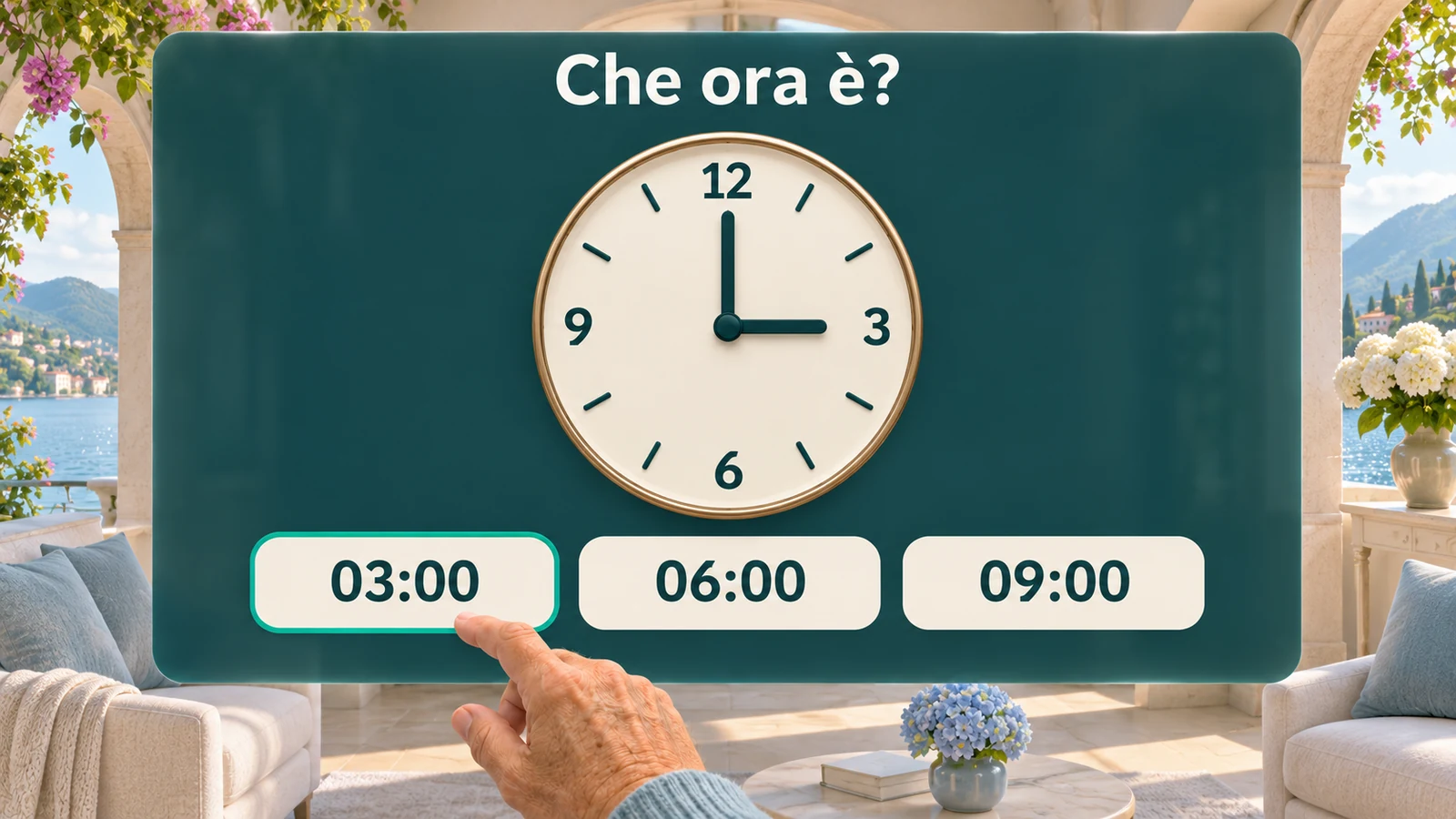
04
Orientation
Recognising time references
Stimulation relating to time, space and context.

05
Executive functions
Organising a sequence
Tasks involving planning, sequencing actions and applying rules.

06
Visuospatial abilities
Assembling and positioning shapes
Tasks involving recognition of shapes, positions and relationships between objects.
Illustrative previews of the headset experience.

01 · ORIENTATION
Reality orientation
Orientation activities involve temporal, spatial and contextual references, through recognising places, times of day and the positions of objects.
Virtual environments make it possible to present these activities in visually understandable situations.

02 · FAMILIARITY
Reminiscence and familiarity
Known objects, familiar images, meaningful environments and autobiographical content can provide opportunities to recall memories and encourage conversation.
Where appropriate and authorised, the project may incorporate personal materials to make the experience more closely reflect the person’s life story.

03 · GRADED SUPPORT
Facilitated learning and progressive assistance
When an exercise proves difficult, the experience should not become a succession of frustrating errors.
The device is designed to provide simpler instructions, hints, demonstrations and guided practice attempts.
The AI assistant will need to grade this assistance according to rules agreed with the clinical team and record when it was needed.
04 · MULTIDOMAIN
Multidomain cognitive stimulation
Everyday activities often require several cognitive functions to be used at the same time.
Recognising the objects needed to set the table, remembering a list or following a sequence can involve memory, attention, language and planning.
The activity repertoire is therefore organised to engage multiple cognitive domains, with tasks and levels selected within the individual therapeutic plan.
05 · EVERYDAY LIFE
Cognitive tasks related to everyday life
Exercises can reflect simple, familiar situations:
Activities described in the protocol
- recognising objects in a room
- putting a sequence in order
- identifying items belonging to the same category
- choosing the objects needed for a particular activity
- matching images and words
- finding one’s way in a virtual environment.
The design aim is to make tasks understandable and meaningful. Any transfer of benefits to everyday activities will need to be assessed using appropriate clinical tools.
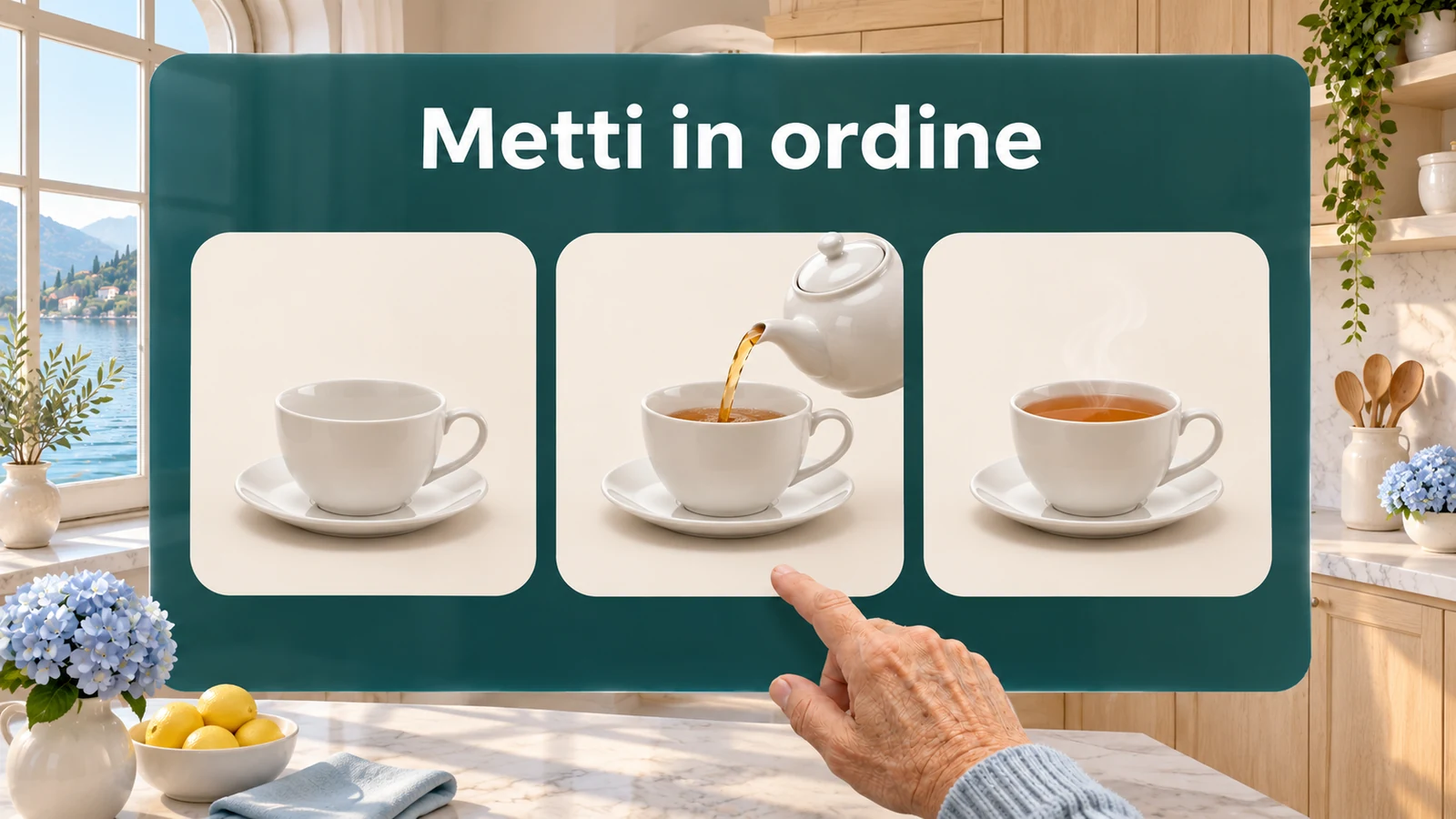
Illustrative preview of the experience in the headset.
06 · PERSONALISATION
Adjusting difficulty within the clinical plan
The protocol envisages different levels of difficulty.
The design principle is that progression occurs when the person achieves at least 80% correct responses in two consecutive assessments at the same level, under comparable conditions.
The system must also distinguish results achieved independently from those achieved with support.
Artificial intelligence will be able to act only on parameters and activities authorised by the professional.

THE IMMERSIVE ENVIRONMENT
Why virtual reality?
Virtual reality makes it possible to place activities in coherent visual environments and interact directly with the elements that make up an exercise.
It is a way of presenting activities that can make them more tangible and engaging.
Research is exploring its possible applications, but clinical benefits depend on the intervention used and must be documented through appropriate studies.
The first step is to talk.
Discover LUCIDA VR and the pathway best suited to your needs.